


In November and December 2024, the project hosted the final two webinars of the series “Unlocking biodiversity value in spatial planning”, providing a platform to discuss both broad strategic approaches and practical case studies that demonstrate transformative change in action.
The first webinar, entitled “Biodiversity relevant transformative changes in spatial planning” was the occasion to open up the discussion to a larger number of external stakeholders, to examine together drivers, barriers, and opportunities for embedding biodiversity in spatial planning. The second one, entitled “Arenas for Transformation: Potentials and Challenges for triggering transformative change” brought the focus back to the three BioValue Arenas for Transformation by involving local stakeholders to take a closer look at concrete examples, showcasing real-world applications of BioValue methodologies. Together, these discussions underscored the importance of multi-level governance, stakeholder engagement, and economic incentives in driving biodiversity-positive spatial planning.
Webinar #4: Biodiversity relevant transformative changes in spatial planning

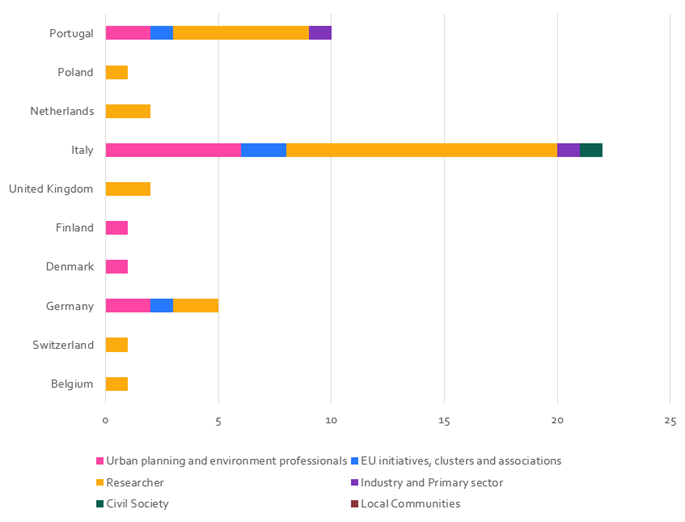
The webinar addressed the fundamental question: ‘How can spatial planning be a catalyst for biodiversity transformation?’ The session embraced an inclusive outreach approach, expanding beyond BioValue’s direct network to engage a broader spectrum of stakeholders, involving 46 participants from 10 countries, representing a wide range of sectors, including urban planning, consultancy, NGOs, and government agencies.
Key discussions and insights:
- Top-down VS. bottom-up drivers: National policies and local-level initiatives were both identified as drivers of change for spatial planning transformation, with the interplay between these levels essential for achieving biodiversity goals.
- Political will and capacity building: A strong commitment from policymakers and ongoing capacity-building efforts were emphasized as essential for integrating biodiversity into planning and ensuring cross-sector collaboration.
- Integration across sectors: Spatial planning was acknowledged as a critical integrative field, where multiple policies and sectors converge (e.g. agriculture, energy, infrastructure and urban development). However, siloed approaches continue to limit biodiversity integration. Cross-sector partnerships are essential to enhancing policy coherence and maximizing impact.
- Collaboration challenges and innovation opportunities: Stakeholders face mismatched priorities and limited incentives to collaborate. Innovative financing mechanisms, such as biodiversity credit schemes or public-private partnerships, could support cross-sector initiatives.
- Biodiversity perceptions and regional challenges: In some regions, biodiversity is still viewed as an obstacle rather than an asset—e.g., Polish farmers raised concerns about biodiversity impacting crops. Therefore, transformative change requires a shift in perception, emphasizing the economic and social benefits of biodiversity integration
The interactive breakout sessions facilitated deep discussions on transformative pathways, allowing participants to exchange ideas on practical policy recommendations for integrating biodiversity into spatial planning frameworks.
Webinar #5 – Arenas for Transformation: Potentials and Challenges for triggering transformative change
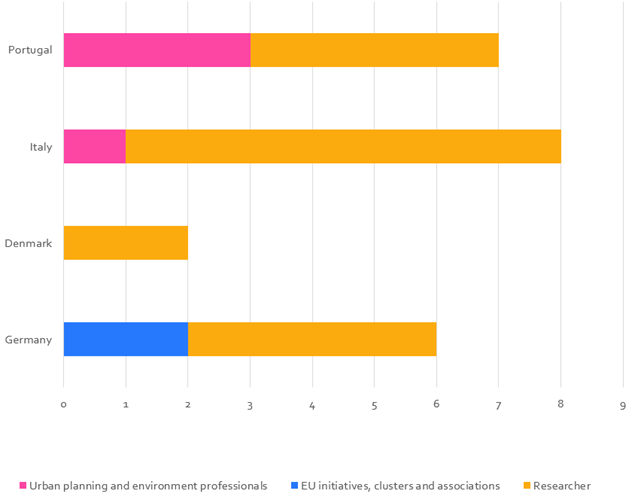
The webinar provided a practical perspective, showcasing the three Arenas for Transformation, where BioValue’s methodologies are being applied to real-world biodiversity challenges. The online session brought together 23 local stakeholders, primarily from academic and urban planning backgrounds.
Arenas for Transformation and key insights
- Mecklenburg-Vorpommern (Germany) – Rewetting Peatlands: Discussions centered on the balance between rewetting land and preserving dry meadows for biodiversity. Participants highlighted the need for broader landscape-scale strategies and greater integration of farmers into conservation efforts.
- Mafra Municipality (Portugal) – Integrating Biodiversity into Municipal Spatial Planning: Biodiversity was viewed as an integral part of local spatial planning, with tools like ecosystem services mapping and economic incentives for forest management playing a pivotal role in enhancing biodiversity outcomes.
- Trento Municipality (Italy) – Urban River Restoration: The restoration of the Fersina River in Trento was discussed as a case study of urban biodiversity planning, with a focus on engaging local communities (through gamification and workshops) and mitigating the risk of green gentrification.
By presenting the cases of the Arenas, the webinar provided a valuable exchange of insights, demonstrating how BioValue’s methodologies can be tailored to different geographical and socio-economic contexts.
Conclusions and next steps
Together, the two webinars reinforced the concept that transformative change in spatial planning requires a multi-faceted approach. Top-down policies, bottom-up initiatives, financial mechanisms, and public engagement all play a role in making biodiversity a central component of planning decisions.
Moving forward towards its end, the BioValue project will continue to:
- Support policy discussions on biodiversity integration.
- Advance transformation arena initiatives, applying insights from the webinars to real-world contexts.
- Engage stakeholders at multiple levels, ensuring knowledge-sharing and collaboration across sectors.
Read the webinars’ full report.
Watch the recordings of the two sessions:
Picture credits: Freepik
